The Chutney Incident
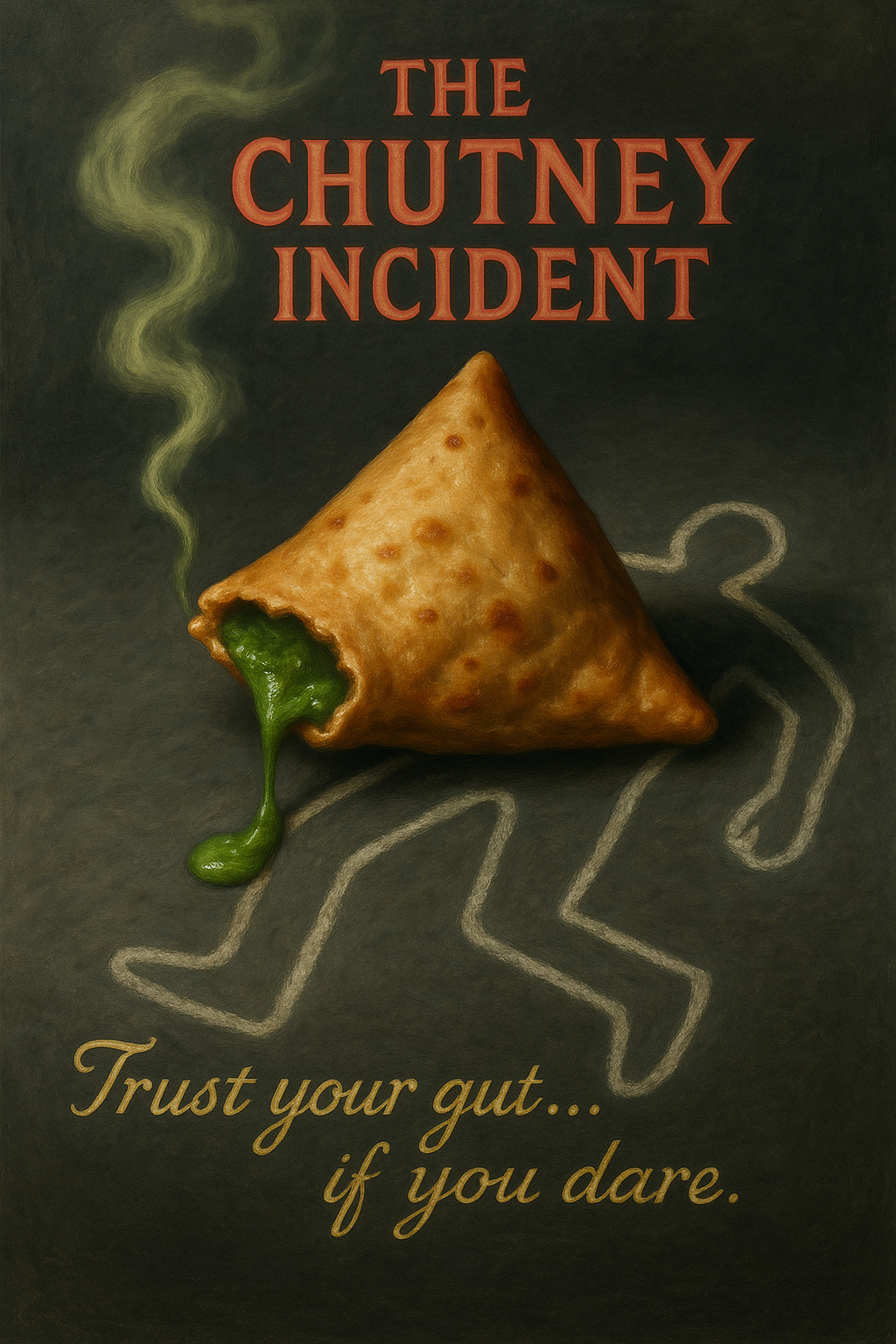
It was a Tuesday evening in July 2025. The kind of evening where the air smells like salt and frying masala, and the only thing louder than the waves is the kitchen staff arguing about whose turn it is to clean the tandoor.
We were at a beach shack in Colomb, Goa. Five of us, post-meeting, starving. The kind of hungry where you order everything on the menu and still ask "aur kya hai?" after the waiter brings the first round.
The order was simple: green chutney. Just green chutney. A side. An afterthought. The kind of thing you don't even think about until it's not there.
It didn't arrive.
Not because the kitchen forgot. Not because they were out. But because the order was written on a piece of paper, handed to the kitchen, and somewhere between the counter and the chutney station, it evaporated. Like mist off the Arabian Sea.
The waiter came back. "Sir, which order?" We said green chutney. He went back. Came back. "Sir, kitchen says no green chutney order." We showed him the paper. The paper had a mark on it — a smudge, really, from someone's wet thumb. The kitchen had misread it as "ginger chutney" and made that instead. By the time the confusion cleared, the chutney was warm, the ice in our drinks had melted, and two of our group had already started eating from the neighbouring table's order.
That's when someone said it. The sentence that started everything.
"There has to be a better way to do this."
Not a revolutionary statement. Not a eureka moment. Just five tired people in a beach shack who had spent the last decade building software for other people's problems, suddenly realising that the problem right in front of them — the one affecting every restaurant, cafe, bar, and hotel in Goa — hadn't been solved properly by anyone.
We pulled out a napkin. Yes, actually pulled out a napkin. And started drawing.
A POS that connects to the kitchen. Real-time. No paper. No smudges. A display in the kitchen that shows orders as they come in — like a KDS, but not the £3,000-per-terminal kind that only works with one specific POS vendor. Something open. Something that talks to the bar too. And the hotel upstairs. And the staff schedule. And the inventory.
"What about the chutney, though?" someone asked. "The chutney problem isn't just about the order. It's about the ingredients. If they'd run out of coriander, someone should have known before the order came in."
That's when the Phantom BOM idea was born.
A Phantom BOM — Bill of Materials — is a recipe that exists only in the system. You never stock green chutney as a product. You stock coriander, mint, green chillies, lemon juice, salt. When someone orders green chutney, the system deducts the ingredients automatically. Real-time. No manual stock check. No "out of chutney" surprises at 9 PM on a Saturday.
We finished our (warm, ginger) chutney. We drove home. And for the next three months, we built B.O.B. — Built On Business.
Six apps. One for the POS. One for the kitchen. One for the bar. One for the admin. One for staff. One for hotel stays. All connected by WebSocket, all talking to each other in real-time. All built on Odoo ERP because we needed accounting, HR, and inventory that actually worked — not another SaaS subscription with features locked behind ₹10,000/year paywalls.
B.O.B is open source. Self-hosted. No per-feature fees. No vendor lock-in. 51 phantom BOMs covering 61 ingredients. Multi-language — English, Hindi, Konkani — because the staff who actually use this thing don't all speak the same language.
It started with green chutney. It became a hospitality platform.
And the chutney? The shack fixed their order system. They're now one of our beta testers. The chutney arrives every time.
Hungry for more?
B.O.B is open source. Clone it, deploy it, feed your customers properly.
Contact Us →